Whenever India and Pakistan face each other on the cricket field, the contest is never just about runs and wickets. The Asia Cup 2025 match in Dubai was no exception, but this time the focus shifted from the scoreboard to a simple gesture—the missing handshake. What might have seemed minor at first soon grew into a controversy that questioned sportsmanship, politics, and the very spirit of cricket.
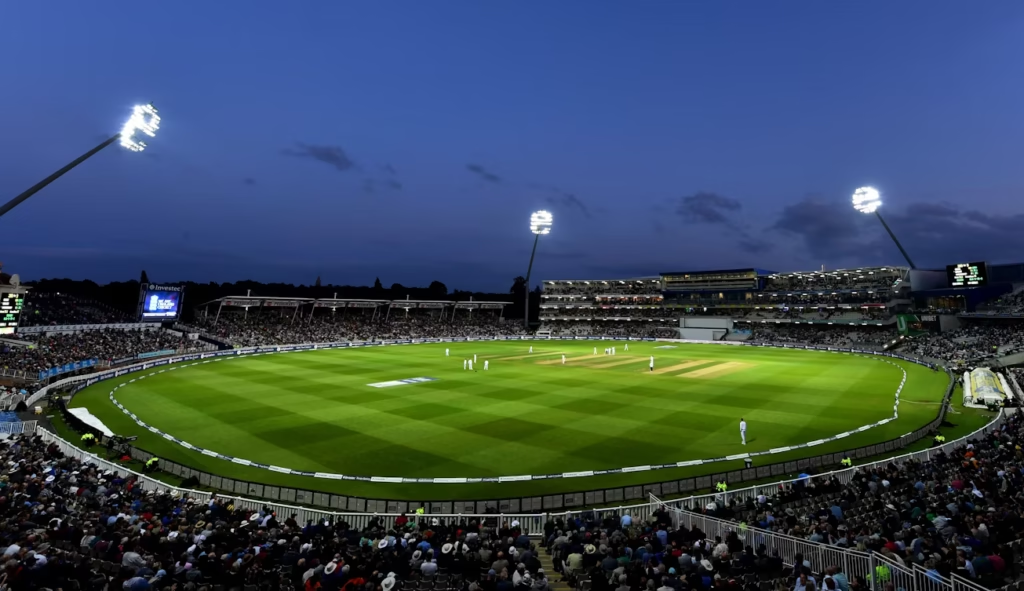
Asia Cup 2025 turned heated when India and Pakistan players refused to shake hands, sparking a global debate on sportsmanship, politics, and cricket’s spirit. Here’s a detailed look at what really happened, reactions, and its impact on future matches.
What Happened: Timeline of the Handshake Row
| Event | Detail |
|---|---|
| Match Result | India defeated Pakistan by 7 wickets in their Group A match. Reuters+1 |
| Toss and Post-match | Captains did not shake hands at the toss, and after the match Indian players left the field without the customary post-match handshake. Al Jazeera+2Wikipedia+2 |
| Reason Given | Indian captain Suryakumar Yadav said the decision was aligned with the Indian government and BCCI, and that it was a symbolic gesture in response to recent events, including the Pahalgam terror attack. Al Jazeera+2NDTV Sports+2 |
| Pakistan’s Response | Pakistan expressed disappointment. The Pakistan Cricket Board (PCB) lodged a formal complaint with the ICC. Captain Salman Ali Agha skipped the post-match presentation. Reuters+2Gulf News+2 |
| Match Referee Involvement | Zimbabwean referee Andy Pycroft was blamed by PCB. Pakistan demanded his removal from the tournament. Pycroft later apologized, calling the incident a “miscommunication.” AP News+2Dawn+2 |
| Delayed Match vs UAE | Pakistan’s next game (vs UAE) was delayed by one hour amid participation doubts and unresolved tensions. Reuters+2Gulf News+2 |
What Happened in Dubai?
The highly anticipated clash saw India defeat Pakistan by seven wickets in their Group A encounter (Reuters). However, the post-match celebrations turned tense as Indian players skipped the traditional handshake. At the toss too, both captains avoided shaking hands, an unusual sight in international cricket.
According to reports from Al Jazeera, Indian skipper Suryakumar Yadav confirmed the decision was in line with the Indian government and board, citing solidarity with victims of the recent Pahalgam terror attack.
On the other side, the Pakistan Cricket Board (PCB) expressed disappointment. Captain Salman Ali Agha even skipped the presentation ceremony, while PCB lodged an official complaint with the ICC.
The Role of the Match Referee
Adding fuel to the fire, the PCB accused match referee Andy Pycroft of mishandling the situation. They claimed Pycroft had asked the Pakistani side not to expect a handshake at the toss. Later, Pycroft apologized, calling the incident a “miscommunication” (AP News).
Pakistan demanded his removal from the tournament, insisting that referees must remain neutral and avoid influencing symbolic gestures of the game (Dawn).
Political Undercurrents Behind the Gesture
The controversy highlighted how deeply politics and cricket intertwine whenever India and Pakistan compete. By refusing to shake hands, India made a symbolic political statement. This was more than sports—it was an extension of national sentiment.
The Indian team dedicated their victory to victims of terror, while critics argued that such actions blur the line between patriotism and the spirit of sportsmanship. For Pakistan, the move was seen as disrespectful and damaging to cricket’s culture of mutual respect.
Reaction from Fans and Media
The controversy instantly trended across social media platforms. Millions of fans debated whether politics should influence sports. Some defended India’s stance, while others criticized both sides for letting politics overshadow the beauty of cricket. As we discussed in our earlier blog on why entertainment is important in our lives, sports too play a powerful role in shaping culture and unity beyond boundaries.
Former cricketers also weighed in, with many warning that gestures like this could set a dangerous precedent (India Today).
Fallout of the Handshake Row
The impact didn’t end with one match. Pakistan’s next game against the UAE was delayed for an hour after participation doubts arose (Reuters). PCB also sent multiple letters to ICC demanding clarification and accountability (Gulf News).
While the ICC did not remove Pycroft, the incident left a shadow over the tournament, with many questioning whether cricket’s governing bodies can truly keep politics off the pitch.
Spirit of Cricket in Question
The Spirit of Cricket is not written in strict law but serves as a guiding principle—respect for opponents, officials, and the game itself. Handshakes may not be legally binding, but they are powerful symbols of sportsmanship.
This controversy shows that when politics enter the arena, even small traditions can become flashpoints. The missing handshake will now be remembered as a defining moment of Asia Cup 2025, long after scores and statistics are forgotten.
Frequently Asked Questions
Q1. Was refusing to shake hands against ICC rules?
No, it wasn’t a violation of any written ICC law. However, it went against the “Spirit of Cricket,” which emphasizes mutual respect and sportsmanship.
Q2. Why did India refuse the handshake?
Indian players, led by Suryakumar Yadav, cited solidarity with victims of the Pahalgam terror attack and said the move was in line with the government and BCCI.
Q3. What action did Pakistan take?
PCB lodged formal complaints, demanded the removal of match referee Andy Pycroft, and delayed their participation in the following game against the UAE.
Q4. Did Andy Pycroft apologize?
Yes, Pycroft admitted to miscommunication and apologized, but Pakistan insisted that the damage to the spirit of cricket had already been done.
Q5. How could this affect future India-Pakistan matches?
The incident might influence protocols in upcoming encounters, with governing bodies possibly issuing clearer guidelines on symbolic gestures to avoid similar controversies.
Conclusion
The Asia Cup 2025 handshake dispute wasn’t just about etiquette—it symbolized how political realities spill onto the cricket pitch. For India, the refusal was a statement of solidarity; for Pakistan, it was a breach of respect. The fallout shows that cricket is no longer shielded from wider geopolitical tensions.
As the debate continues, one truth stands clear: the world expects cricket to rise above politics. Whether the spirit of cricket can survive such pressures will determine how future generations remember not just this controversy, but the game itself.